Common vehicle model names for FiveM
These examples are drawn from the official Cfx Vehicle Models reference. Enter the model-name column where your authorized vehicle tool requests a model. A listed model does not guarantee that a server allows players to spawn it. This is a curated starter list, not a complete catalog or a GTA VI list.
| Display name | Model name | Display name | Model name |
|---|---|---|---|
| Adder | adder | Sultan | sultan |
| Sultan RS | sultanrs | Blista | blista |
| Asea | asea | Buffalo | buffalo |
| Dominator | dominator | Bati 801 | bati |
| BMX | bmx | Police Cruiser | police |
| Ambulance | ambulance | Fire Truck | firetruk |
| Taxi | taxi | Dinghy | dinghy |
| Maverick | maverick | Dodo | dodo |
How to use a spawn code on your server
Start with your server’s documented admin tool or vehicle menu. If it provides a model-name field, use the exact registered name. If its documentation defines a command taking a model argument, follow that syntax and its permission requirements. There is no reason to assume a command copied from another server exists on yours.
Cfx’s first Lua script tutorial demonstrates registering a command named car; it is a tutorial resource, not proof that every FiveM server has that command installed. An unknown-command response and an invalid-model response describe different failures. Check command registration or permissions before changing vehicle files.
A successful administrative spawn also does not establish ownership, a saved garage record, keys or purchase eligibility. Test those framework workflows through the resource that owns them. Do not use a diagnostic vehicle as evidence that a dealership integration is complete.
Find custom vehicle model names registered on your server
Cfx documents GetAllVehicleModels as a client native returning registered model names, including custom models. It omits vehicles unregistered during runtime, such as those from a stopped resource. The read-only diagnostic below filters those names, sorts matching results and prints at most 40 entries to F8.
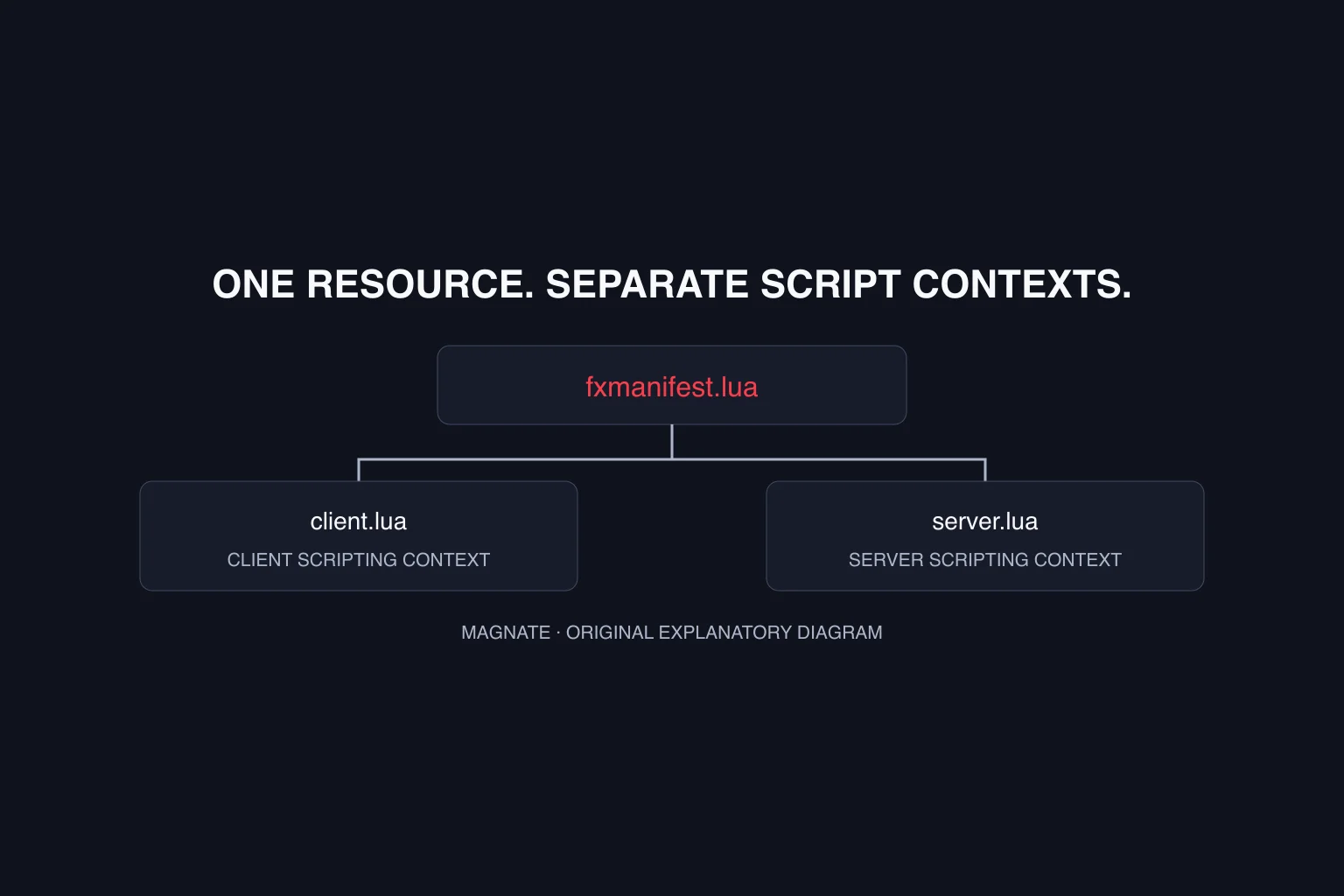
Add it to a client script in a staging resource and declare that script in the manifest. Run magnate_findvehicle sultan in F8 to search for that text, then try the distinctive prefix supplied by your custom vehicle author. Use a unique command name if needed. This example has been reviewed against the native documentation; Magnate has not executed it inside GTA V.
RegisterCommand('magnate_findvehicle', function(_, args)
    local query = table.concat(args, ' '):lower()
    if #query < 2 or #query > 64 then
        print('Use magnate_findvehicle followed by a short search term (2–64 bytes).')
        return
    end

    local matches = {}
    for _, modelName in ipairs(GetAllVehicleModels()) do
        if modelName:lower():find(query, 1, true) then
            matches[#matches + 1] = modelName
        end
    end
    table.sort(matches)
    for i = 1, math.min(#matches, 40) do
        print(matches[i])
    end
    print(('Found %d matching models; showing up to 40.'):format(#matches))
end, false)
Model name, resource folder, display label and hash
Keep these identifiers separate in your test notes. A resource folder identifies the package being started. A model name identifies a registered asset. A display label is the player-facing text, and a model hash is the numeric identifier accepted by relevant natives. A renamed folder alone does not prove that the model name changed.
For an add-on package, consult its instructions and supplied vehicle metadata. Avoid guessing the code from the product title or a screenshot. If multiple packages define the same model, isolate the conflict on staging before assuming the newest package is active.
The vehicle class is another independent value. A returned class such as 7 for Super is not the model’s spawn name. Use the vehicle classes guide when diagnosing category filters, and the vehicle resource guide when checking manifest and metadata declarations.
Troubleshoot the specific failing step
Record the server, game build, resource version, exact model name, command or menu used and full error text. First check whether the command exists and your account is authorized. Next check whether the expected resource started, its dependencies loaded and the model appears in the registered list. Finally test creation and the framework-specific behavior separately.
If the registered name appears but a menu rejects it, inspect the menu’s allowlist or vehicle catalog. If it does not appear, review the package startup and metadata rather than repeatedly trying unrelated model names. The diagnostic does not check textures, collision, handling, network ownership or persistence.
For public-server vehicle purchases and restricted actions, enforce the relevant permissions and ownership rules on the server. Client-provided model strings and a visible menu option are not sufficient authorization for a server to grant a vehicle.
Questions, answered.
Is /car a universal FiveM command?
No. Commands are registered by resources. Use your server’s documented vehicle tool and required permissions.
Why does a custom car’s folder name not work as its spawn code?
The folder identifies a resource; the model name identifies the vehicle asset. Check the package documentation and registered model list for the exact name.
Does this list include every custom vehicle?
No. Custom assets depend on the installed server resources. The included diagnostic searches models currently registered on the connected client.
Sources & editorial notes
Source review: November 7, 2026. Platform announcements can change. This guide separates published facts from Magnate’s original analysis and preparation advice.
- Cfx — Vehicle Models Official GTA V display names, hashes and model names.
- Cfx — GetAllVehicleModels Client API for currently registered vehicle model names.
- Cfx — Creating Your First Script in Lua Tutorial command registration and vehicle spawning example.
- Cfx Documentation — Data Files Typed metadata mounting reference, including vehicle and handling data.
- Cfx — Secure your events Server-side validation of client-triggered actions.
Published by an independent editorial brand. Read our editorial standards.